
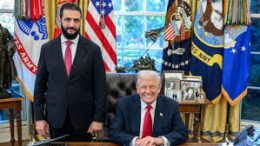
One year after the fall of Bashar al-Assad and the collapse of his decades-long regime, celebrations erupted across Syria. From a human perspective, the end of an entrenched dictatorship is a moment that deserves recognition. Yet the departure of Assad does not necessarily mean that the deeper power structures that shaped Syria have disappeared. The foreign influence long embedded in Syria’s political system—particularly that of the United States—remains intact and has now simply crystallized around a new figure: Ahmed al-Sharaa.
Washington’s New Partner
Ahmed al-Sharaa is Washington’s preferred successor, groomed with the help of Turkish President Recep Tayyip Erdoğan. The United States relied on Turkey to manage tensions with Russia and to cultivate an alternative to Assad after years of failing to construct a credible Syrian opposition movement of its own. During Assad’s final years, Washington tolerated his survival on the condition that he widen his government to prevent Syria’s disintegration. On American instructions, Iran, through Hezbollah, played a central balancing role—supporting Assad militarily and politically while leaving him as an option acceptable to the U.S. at the time. Simultaneously, Washington encouraged its regional clients in the Arab League, such as Saudi Arabia and the UAE, to re-engage with Assad. When Assad allegedly refused to meet these expectations, Erdoğan was given the green light and latitude to facilitate al-Sharaa’s rise. This shift unfolded rapidly as Iran retreated from Syria, Hezbollah suffered leadership losses in confrontations with Israel, and Assad’s internal support structure crumbled.
Long-Standing U.S. Contacts
A New York Times report recently revealed that al-Sharaa had maintained discreet contact with the U.S.-led coalition since 2016, coinciding with his separation from Jabhat al-Nusra. According to the report:“The Syrian leader has been discreetly cooperating with the U.S.-led coalition against ISIS and Al Qaeda since he took control of a slice of rebel-held territory in northwestern Syria in 2016.” (NYT, 12/11/25)
The article confirmed what has been analysed in previous analysis, that al-Shara has long been aligned with Washington’s strategic objectives, even while the U.S. publicly designated his former organization, Hay’at Tahrir al-Sham (HTS), as a terrorist group.
American Support After His Rise to Power
Following al-Sharaa’s ascent, Washington and its regional clients have visibly worked to strengthen his position. Al-Sharaa appeared alongside President Trump during a visit to Saudi Arabia earlier this year, receiving high-profile praise. Recently, in a letter delivered by US Representative to Syria, Tom Barack, to al – Sharaa, reported by Al Arabiya, Trump expressed his personal confidence in al-Sharaa, writing:
“Ahmed, you will be a great leader — and the United States will help!” (3/12/25)
Yet, U.S. policy in Syria is not driven solely by support for al-Sharaa. It is also shaped by America’s broader regional strategy, including the security of Israel.
Israel’s Calculations vs. Washington’s Goals
Israel’s approach to Syria remains focused on territorial security, containment of hostile actors, and maintaining Syria’s internal fragmentation to reduce future threats. This includes consolidation of control over the Golan Heights, targeted strikes on Syrian military assets, and interventions to protect the Druze.
Washington’s priorities, however, extend beyond Israel’s immediate tactical concerns. The U.S. has pressed al-Sharaa to pursue a security arrangement with Israel and encouraged Saudi Arabia and other Arab states to integrate Syria into the broader “normalization” framework. The goal being to stabilize the region under U.S.-aligned structures and create leverage to shape a resolution of the Palestinian question on American terms.
These issues were reportedly discussed during al-Shara’s recent visit to Washington, along with negotiations over Syrian economic reconstruction, military cooperation, and future contracts for U.S. firms.
Growing Domestic Concerns
Once the euphoria dies down and reality kicks in, for many Syrians, the perception that their new leadership is too closely aligned with Washington will start to spark unease. Reports from inside Syria suggest that prisons are again filling and that abuses reminiscent of the Assad era are re-emerging.
This is because, the civil war in Syria occurred as a result of the so called Arab Spring, the outcome of which was meant to be liberation for the oppressed masses and the deliverance of democracy. Instead, Washington backtracked when it realised that the masses veered against America and towards non-liberal parties. In order to maintain control, Washington then reverted to it default position of supporting brutal dictatorships and military rule as in the case of Egypt, or tore countries apart creating political vacuums such as Libya and Yemen in order to remove British influence.
Furthermore, Washington has historically struggled to build authentic local support in Syria because many factions opposed both Assad and foreign influence. Groups such as the American created Syrian Democratic Forces (SDF) faced internal fractures, partly because members objected to serving U.S. interests.
With resistance to American presence still strong, al-Sharaa has signed a security agreement permitting U.S. forces to operate in Syria under the pretext of combating ISIS as means for a permanent military insertion and to crush any attempt to challenge al-Sharaa.
The Road Ahead
U.S. involvement in Syria’s current trajectory represents a shift from one form of foreign dependency to another. Unless Syrians assert independence from external powers, the cycle of instability, repression, and external domination will continue, as Ahmed al-Sharaa will not chart a genuinely sovereign course for Syria but instead remain closely tethered to Washington’s regional agenda.

Be the first to comment on "A Year of Realignment: How Al-Sharaa Anchored Damascus to U.S. Interests"